
WILD ABOUT CATS
There is nothing quite as exciting as seeing cats in the wild — whether it’s a pride of playful lions, a solitary leopard lying up in a tree, or a cheetah sitting atop a termite mound. Cat sightings are a real highlight for many guests — and rightly so.
As any guide will tell you, seeing cats should never be taken for granted. But you can be sure they’re always on the lookout for tell-tale signs so they can show them to their guests.
Numbers have been decimated in recent decades, largely through habitat destruction as well as conflict with ever-increasing human populations. We are therefore thankful to the many individuals, lodges and institutions who have prioritised conservation in Africa. They could not have done it without tourism, and we are indeed most thankful to the tourists who visit our shores and help sustain conservation initiatives.

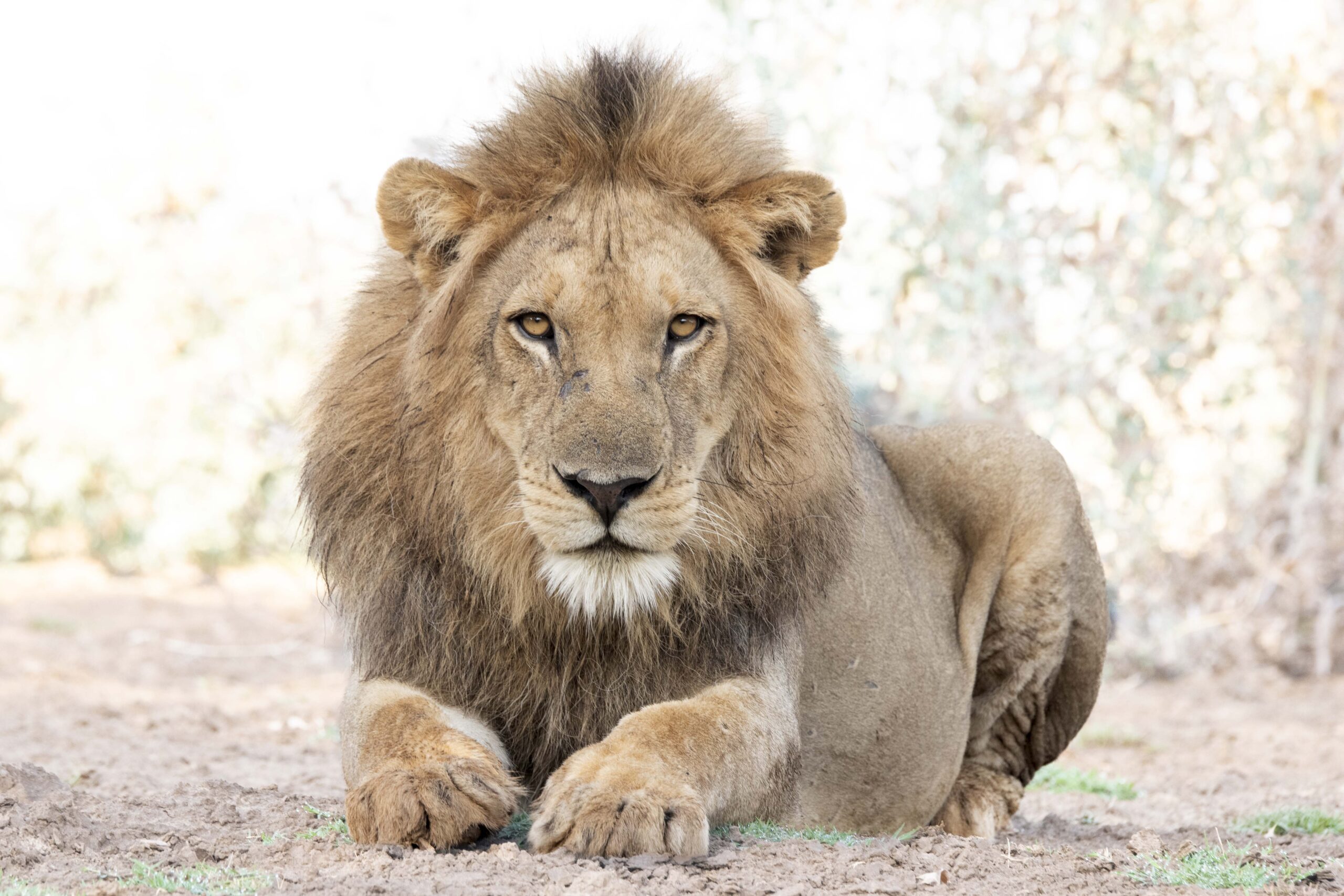
Lions
The most recent IUCN audit puts lion populations at between 22,000 and 25,000 animals — a decline of about 30% since 2006. Tanzania has by far the largest numbers, with about 14,500 animals. South Africa is second with about 3,200, followed by Botswana (3,000), Kenya (2,500) and Zambia (2,400).
In my personal experience, Tanzania, South Africa, Botswana, Kenya, Zambia and Zimbabwe are the best places for seeing lions in the wild — and the facts seem to support this. The highest concentration is in the Ngorongoro Crater, where roughly 60 to 75 lions occupy an area of 260 square kilometres. Game-rich areas such as Seronera in the Serengeti have up to 40 lions per 100 square kilometres, while the Masai Mara has densities of 25 to 30 lions per 100 square kilometres. Of course, numbers are highly variable and will peak during the migration.
The Okavango is stunning lion country, and its super-strong lions — which have adapted to swimming through water — are awesome to view. In the richest permanent floodplains, such as Chief’s Island and Mombo, densities reach more than 20 lions per 100 square kilometres. During the flood period, many predators are forced onto high-lying islands, so density increases further. Duba Plains also has abundant buffalo, and lions are found in large numbers there, often hunting by day.
Unlike the wide-open plains of East Africa, the Sabi Sands and Greater Kruger have thick bushveld vegetation, with densities of roughly 12 lions per 100 square kilometres. The management of sightings and communication between guides makes viewing here very productive.
Leopards
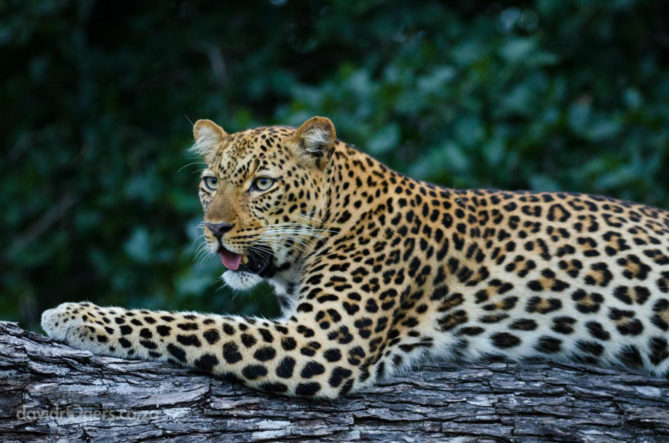
These shy cats are much harder to count, but estimates of 700,000 across Africa are thought to be exaggerated. Once again, South Africa, Botswana, Zambia, Tanzania and Kenya come out on top for sightings.
Zambia’s Luangwa Valley is described as having the world’s highest naturally occurring density of leopards. The heavily managed Sabi Sands, Mala Mala and Londolozi areas have similar densities and are extremely tolerant of vehicles, thanks to high sighting frequency and well-managed viewing protocols.
Cheetah
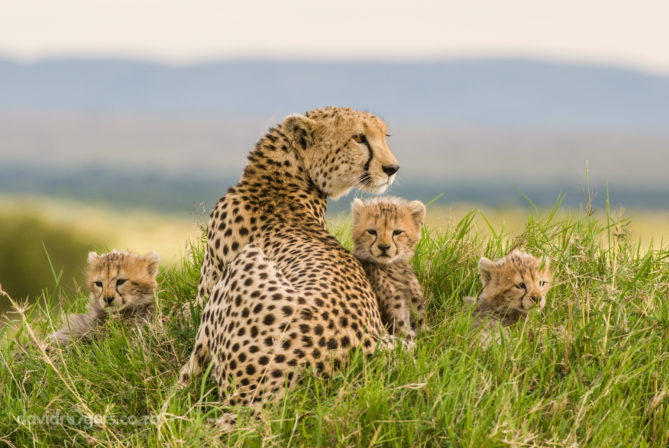
Interestingly, cheetah are the rarest of the three, numbering roughly 7,000 individuals continent-wide. Namibia has the largest population — and most of their numbers live outside national parks, on the fringes of farmland areas. Botswana, South Africa, Kenya and Tanzania also have considerable numbers of cheetah, with most of these populations found within game reserve areas.
The Serengeti has an average of 2 cheetah per 100 square kilometres — a prime stronghold because of its vast short-grass plains. Cheetah struggle in the predator-rich areas of the Sabi Sands because of the large numbers of lion and leopard, but sightings do occur. The Okavango has about 1 cheetah per 100 square kilometres.
Namibia is regarded as the cheetah capital, with the highest numbers of these cats, but 90% of them live completely outside national parks, on farmland. Cheetah numbers in Etosha are down considerably as a result of pressure from lions.
Interestingly, you’re most likely to see cheetah during the daytime, since they’re adapted to hunting when other cats are less active. Cheetah and lions are not good neighbours, so if there are lions about, you’re unlikely to find cheetah nearby.
Off-Road and Night Game Viewing
The ability to go off-road in private game reserves and concessions is a major factor in seeing lions up close. Although guides will sometimes bend the rules a little for major sightings, the fact that you cannot go off-road in national parks and areas such as Ngorongoro is worth considering. Lions and leopards hunt at night, so the ability to go on game drives after dark is another reason to consider private reserves that allow this. South Luangwa in Zambia is one of the few national parks that permits night drives.
Game Viewing Management
While areas like the Sabi Sands and Mala Mala virtually guarantee Big Five sightings, these are often tightly controlled, with limited numbers of vehicles allowed at any one sighting — so you may only get 15 minutes before the next vehicle takes its turn. In the Okavango, the concessions are vast and vehicles are few, meaning game-viewing time limits are virtually non-existent. Where vehicle-number rules are not strictly enforced — such as in the Masai Mara and, at times, the central parts of South Luangwa — large numbers of vehicles can crowd big cat sightings, which is something to avoid.
Photography Tips
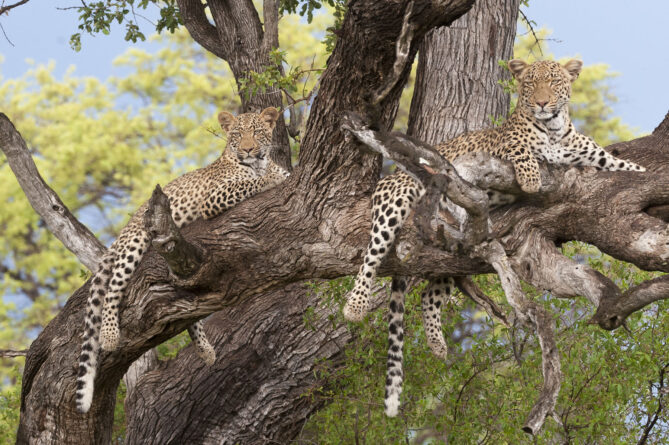
Whether you want to use your iPhone or a DSLR, it’s a joy photographing cats. A few things to bear in mind:
- Get low. Getting low, eye-level angles on cats makes all the difference. This can be achieved by shooting from low-level hides or by using a monopod with a remote shutter trigger.
- Be ready for action. Cats can go from asleep to full-on action in a flash, so be ready to capture the moment with a shutter speed of at least 1/2000th of a second.
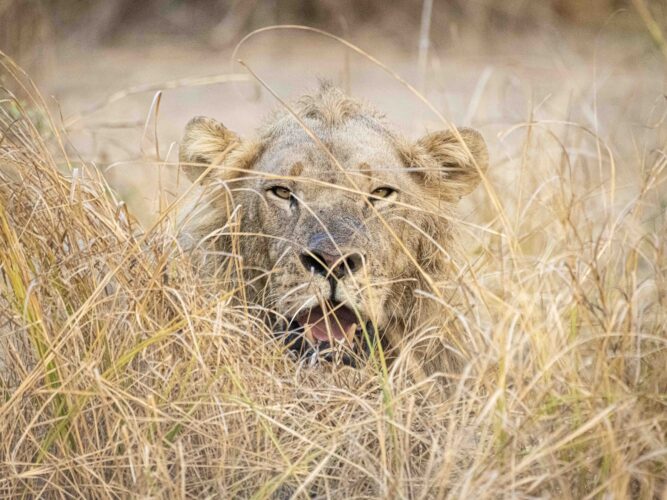
- Use back-button focusing. This can help you keep your subject sharp, especially when it’s partially obscured by long grass.
- Shoot wide open at night. Cats are often active at night, so shooting with a wide aperture — around f/2.8 — combined with manual settings can help you capture correctly exposed, sharp images.
Learn how to capture lions and other predators by anticipating behaviour and staying camera-ready, so you never miss the shot. Our online ‘Sharpen Your Skills’ photography workshop is free for anyone booking with David Rogers Travel. Private guiding with David is also available for a more personalised experience.
Planning a Cat Safari
If cats are a priority on your safari, we hope this is food for thought for your next itinerary. We have great relationships with excellent guides and lodges, and here are a few of our favourites that deserve special mention.
Nsefu Camp for leopards — a historic pick in South Luangwa National Park, Zambia, close to the stork colony where so many great documentaries have been filmed.
Mala Mala is a sure bet for lions and leopards. With 20 kilometres of river frontage on the Sabi River, it is arguably the best bet in South Africa. Big Five sightings are virtually guaranteed each day, with up to 25 individual leopards seen every month, six lion prides, and 83 individually identified lions.
Mombo is, for many, the ultimate camp for cats. It offers the best location in the Okavango Delta, right on Chief’s Island — permanent water on one side, the game-rich Moremi on the other. This is prime cat real estate, where amazing sightings are the norm rather than the exception.
These are just three camps that stand out in our opinion. Of course, we have plenty more up our sleeve to fit all budgets and comfort levels.
Beyond the Big Three: Rare Colour Variants
Travellers wanting something truly unusual should consider the amazing white lions of Timbavati, South Africa, or the elusive black leopards of Laikipia, Kenya — speak to us about tailor-made itineraries to both regions.


